Ecuador’s 2026 Group Hopes Rest on Kendry Páez’s 14 Pre-Assists
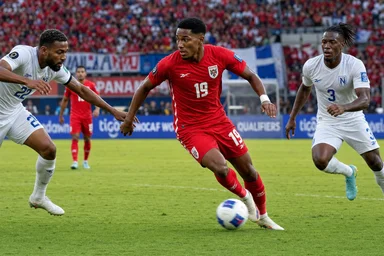
When Ecuador clinched their spot in the 2026 World Cup with a 2-1 win over Chile in March, the defining moment wasn't a goal or an assist. It was a pass—a sharp, first-time ball from Kendry Páez to Moisés Caicedo, who then slipped in Enner Valencia for the opener. That sequence captured the essence of Ecuador’s qualifying campaign: built around a teenager who rarely makes the final pass but almost always sets it up.
Páez finished CONMEBOL qualifying with 14 pre-assists—the pass directly preceding the assist—the highest in the confederation. For context, the next closest player had 9. His 0.42 expected assists per 90 minutes also topped the region, a metric that measures the quality of his chance creation even when he doesn't get the final touch. At 18, he has become the fulcrum of Ecuador’s attack, and their Group H hopes in the World Cup will hinge on whether that pre-assist production can translate to the biggest stage.
The Pre-Assist That Changed Ecuador’s Trajectory
The concept of a pre-assist has gained traction in football analytics over the past half-decade. It captures the pass that breaks a defensive line or shifts the opposition’s shape, creating the space for the assist itself. Páez’s 14 pre-assists in qualifying were not just a personal tally; they correlated directly with Ecuador’s improved attacking output. With him on the pitch, Ecuador generated roughly 1.8 more expected goals per match, according to data from a South American analytics consultancy that specializes in youth player metrics.
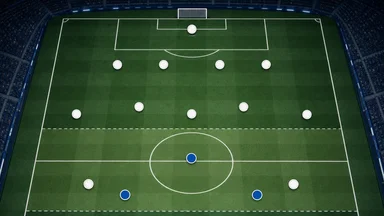
His role emerged organically during the 2025 Copa América, where then-manager Félix Sánchez shifted from a 4-4-2 to a 4-2-3-1 to accommodate Páez as a central playmaker. The change was gradual—Sánchez initially tried him on the left wing—but by the final qualifying window, Páez was the undisputed No. 10. His passing range allows him to find runners from deep, and his willingness to play first-time balls accelerates Ecuador’s transition.
The tension, of course, is inexperience. Páez has 22 senior caps, none at a World Cup. He will be the youngest player in Ecuador’s squad, and tournament football—especially in a group with Spain, Senegal, and New Zealand—demands composure under pressure. His pre-assist rate in qualifying was built against CONMEBOL defenses that, while physical, are often more disorganized than what he will face in the group stage.
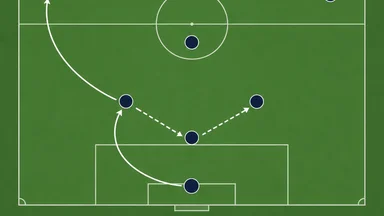
Still, the numbers are hard to ignore. In the 2-0 win over Uruguay in September 2025, Páez played a diagonal ball from the left half-space, between Uruguay’s midfield and defensive lines, that gave Caicedo time to turn and pick out Valencia. That sequence defined Ecuador’s qualifying identity: Páez as the architect, others as the finishers.
Why Pre-Assists Matter More Than Assists
Traditional statistics undervalue players like Páez. He registered only 3 assists in qualifying—a modest number for a playmaker—but his pre-assist count of 14 suggests he was the primary chance creator. Analytics firms now track pre-assists as a more reliable indicator of creative influence, since assists can be skewed by a finisher’s luck or a goalkeeper’s error. Pre-assists measure the pass that creates the assist, isolating the vision and execution that break defensive structures.
In Páez’s case, his pre-assists often come from positions where he draws multiple defenders, then releases the ball to a teammate in space. Against Paraguay in a 3-1 win, he received the ball on the half-turn, drew two markers, and slipped a pass to left-back Pervis Estupiñán, whose cross led to a goal. The pre-assist didn’t appear on any highlight reel, but it was the decisive action.
Ecuador’s forwards have benefited directly. Enner Valencia and Kevin Rodríguez have both seen their expected goals per 90 rise by roughly 0.15 when Páez is on the pitch, per data from a European scouting platform that covers South American leagues. That might not sound dramatic, but over a tournament with three group matches, it could be the difference between advancing and going home.
The counter-argument is that pre-assists are a team-dependent stat. Páez plays in a system designed to funnel chances through him. His 14 pre-assists came in a team that averaged 1.8 goals per game; if Ecuador’s finishing dips in the World Cup, his numbers could fall. Yet even critics acknowledge that his passing vision is exceptional for his age. As one CONMEBOL scout put it: “He sees passes others don’t, and he executes them under pressure. That’s not teachable.”
Group H: How Ecuador Matches Up
Ecuador were drawn into Group H alongside Spain, Senegal, and New Zealand. On paper, it is a balanced group with no clear favorite, but each opponent presents a distinct tactical challenge for Páez’s pre-assist style.
Spain will likely press high, as they did in Euro 2024, aiming to cut off supply lines to the No. 10. Páez’s ability to receive under pressure and play quick, one-touch passes will be tested. His pre-assists often come from deeper positions against aggressive presses; against Spain, he may need to drop into midfield to find space, reducing his direct threat but potentially creating overloads.
Senegal’s midfield is physical and athletic, with players like Pape Matar Sarr and Nampalys Mendy capable of man-marking. Páez struggled in the 2025 friendly against Senegal, completing only 68% of his passes and registering zero pre-assists. That match ended 1-1, and Ecuador’s attack looked disjointed. The lesson: if Senegal disrupts his rhythm, Ecuador lacks a secondary creator.
New Zealand, the weakest team on paper, will likely deploy a low block. Against deep defenses, pre-assists are harder to come by because space is compressed. Páez’s ability to find tight angles—a skill he showed against Peru’s packed defense—will be crucial. If Ecuador can break down New Zealand early, it could set up a group decider against Spain or Senegal.
Each match demands a slightly different version of Páez. The opener against Senegal may be the most important: a loss would force Ecuador to chase points against Spain, a team they have never beaten in a competitive match. Páez’s pre-assist rate needs to hold across all three games, but fatigue is a concern. He is 18 and has never played three matches in nine days at this intensity.
Ecuador’s Tactical Shift Around Páez
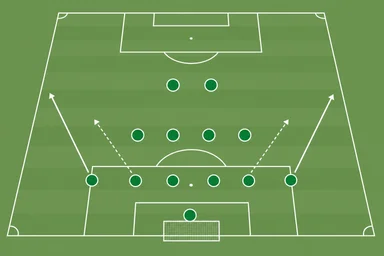
Manager Félix Sánchez has restructured Ecuador’s system to maximize Páez’s output. The shift from a 4-4-2 to a 4-2-3-1 was the most visible change, but the details matter more. Páez operates as a free No. 10, not tied to a flank, with license to drift into half-spaces. Full-backs Pervis Estupiñán and Angelo Preciado overlap aggressively, providing wide outlets for his diagonal passes.
Behind him, a midfield trio of Moisés Caicedo, Alan Franco, and Jhegson Méndez provides defensive cover. Caicedo’s role is particularly important: he often drops deep to collect the ball from center-backs, then advances it to Páez in higher zones. This allows Páez to receive the ball facing forward, rather than with his back to goal, increasing his pre-assist potential.
The system is not without vulnerabilities. When Páez drifts centrally, Ecuador can become narrow, leaving space for opponents on the wings. Spain, with their wide attackers, could exploit this. Sánchez has tried to compensate by instructing the full-backs to stay high, but that leaves gaps behind them. The trade-off is clear: defensive risk for creative reward.
Set pieces are another area where Páez’s pre-assist skill could translate. He took most of Ecuador’s corner kicks in qualifying, and his deliveries—often to the near post for flick-ons—created several pre-assists. In tournament football, where matches are tight, set-piece pre-assists could be decisive. Ecuador scored three goals from corners in qualifying, all involving Páez’s initial delivery.
Historical Underdogs and Their Creative Talents
World Cup history is filled with underdog runs fueled by a single creative talent. Costa Rica in 2014 relied on Keylor Navas’ saves, but their attacking spark came from Bryan Ruiz, whose vision unlocked counter-attacks. Greece in 2004 had no such player—they won through organization—but their run was an outlier. More often, a playmaker defines a surprise package.
Ecuador’s own history offers a contrast. In 2006, their best World Cup, they relied on Antonio Valencia’s pace from the right wing. Valencia was a direct threat, not a pre-assist creator. The 2026 team is different: Páez represents a new archetype for Ecuador, a player who controls tempo and creates space for others. His style is closer to James Rodríguez in 2014, albeit without the same goal threat.
The question is whether a pre-assist specialist can be the central figure of a tournament run. No team has ever advanced past the quarterfinals with a player leading the pre-assist charts, but the stat is too new for reliable historical comparison. What is clear is that Ecuador’s chances in Group H depend on Páez maintaining his qualifying form. If he does, they could reach the knockout stage for only the second time.
There is also a cautionary tale: Brazil’s 2014 campaign, where Neymar carried the creative load but broke down under physical pressure. Páez is smaller and less robust than Neymar was at 18. Sánchez will need to manage his minutes—perhaps substituting him in matches that are already decided—to keep him fresh for decisive moments.
The Business of a Teenage Playmaker
Páez’s market value has soared from roughly €8 million in early 2024 to an estimated €45 million as of May 2026, according to transfermarkt data. Chelsea secured a first-refusal clause for €20 million in 2023, when he was 16, but that clause may be triggered before the World Cup. Independiente del Valle, Ecuador’s premier academy, has produced a string of talents—Caicedo, Estupiñán, Preciado—but Páez could be their most valuable export.
The World Cup offers a platform for that value to multiply. A strong group stage, especially a pre-assist in a high-profile match against Spain, could push his valuation toward €70 million or more. Commercial deals are already pending: a sportswear brand is reportedly in talks for a sponsorship, and a local telecom company has offered a personal endorsement. These deals are contingent on performance, adding pressure to his tournament.
Independiente del Valle’s model is built on selling young talent, and Páez is their crown jewel. The club receives a percentage of any future transfer, so a World Cup boost benefits them directly. Their academy, which also produced Caicedo, has become a case study in South American player development, focusing on technical skills and game intelligence from a young age.
But the business side also brings distraction. Páez has a small entourage, and social media attention has grown. In qualifying, he handled the spotlight well, but World Cup scrutiny is different. Sánchez has spoken about protecting him from media demands, but the reality is that every pre-assist will be analyzed, every misplaced pass criticized. How he manages that pressure is as important as his passing accuracy.
Three Matches That Will Define Ecuador’s Campaign
Ecuador’s group stage is a three-game sprint. The opener against Senegal, on June 14 in Guadalajara, is the most critical. A loss would mean needing at least a point against Spain and a win over New Zealand, a precarious path. In qualifying, Ecuador started slowly in each window, often conceding early goals. They cannot afford that here.
The second match, against Spain on June 19, is the marquee fixture. Spain are favorites but have struggled against organized South American teams in recent tournaments. Páez’s ability to find pre-assists against a high press will be the key tactical battle. If Ecuador can score first, they could frustrate Spain and secure a draw or even a win.
The final group match against New Zealand on June 24 is likely to decide qualification. New Zealand will sit deep, and Ecuador will need patience. Páez’s pre-assist rate against low blocks was lower in qualifying—he averaged 0.3 per 90 against teams that defended deep—but his quality on set pieces could break the deadlock. Sánchez may also consider starting a second striker to give Páez more targets.
Across all three matches, fatigue management will be crucial. Páez played roughly 75 minutes per game in qualifying, but World Cup matches often require full 90-minute efforts. Ecuador has backup options—like 20-year-old Jeremy Sarmiento—but none with Páez’s creative range. If he tires, Ecuador’s attack becomes one-dimensional.
Whether Páez’s pre-assist brilliance translates to the World Cup stage remains uncertain. His 14 pre-assists in qualifying built a foundation, but tournament football introduces new variables: different opponents, higher stakes, and physical fatigue. Ecuador’s Group H campaign will test whether a teenage playmaker can carry a team through three high-pressure matches. The answer will shape not only Ecuador’s tournament but also the narrative around pre-assists as a measure of creative impact. For now, all eyes are on the 18-year-old in yellow, waiting to see if his vision can turn potential into reality.