Algeria’s 2026 Press Relies on Rayan Aït-Nouri’s Inverted Full-Back Runs
When Algeria step onto the pitch for their 2026 World Cup opener, much of the pre-match analysis will focus on Riyad Mahrez’s dwindling pace or Islam Slimani’s aerial threat. But those who watched their qualifying campaign closely know the real fulcrum of their attack operates from an unexpected position: left-back. Rayan Aït-Nouri, the 24-year-old Wolverhampton Wanderers defender, has been reinvented as an inverted full-back whose diagonal runs into central midfield have become Algeria’s primary mechanism for breaking down compact defenses. Aït-Nouri’s role could be the edge that propels Algeria deeper than their 2014 last-16 finish.
Why Algeria’s Left Side Became Their Most Dangerous Weapon
The tactical shift began quietly during the 2025 Africa Cup of Nations, when Djamel Belmadi noticed that opponents were double-marking Mahrez on the right wing, effectively neutralizing Algeria’s most creative outlet. Rather than shifting Mahrez centrally, Belmadi opted to overload the left side by instructing Aït-Nouri to drift infield when Algeria had possession. Within ten minutes of the first group match against Burkina Faso, Aït-Nouri had already created two chances from central areas, leading to a goal by Belaïli. The pattern continued: Aït-Nouri’s central movement drew a midfielder or defender with him, creating space for left winger Youcef Belaïli to attack the flank, while Mahrez’s drifting from the right opened diagonal passing lanes.
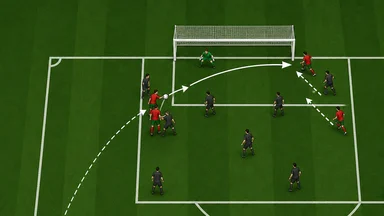
In the 2026 qualifiers, the pattern became even more pronounced. Aït-Nouri averaged 4.3 touches in the opposition box per 90 minutes, a figure higher than many starting strikers. His willingness to receive the ball between the lines forced central midfielders to step out of shape, and when they did, Algeria’s midfield trio of Ramiz Zerrouki, Adem Zorgane, and Ismaël Bennacer could exploit the gaps. During the away qualifier against Burkina Faso, Aït-Nouri’s central run drew two defenders, allowing Zerrouki to slip a pass to Slimani for the opening goal—a clear example of how his unconventional positioning creates mismatches.
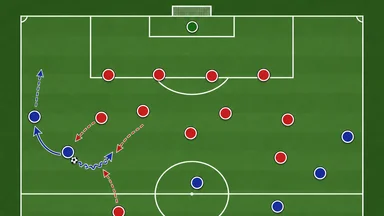
The tactical logic is straightforward: by inverting the left-back, Algeria create a 4-3-3 that becomes a 3-2-5 in possession, with Aït-Nouri forming a midfield box alongside Zerrouki and Bennacer. This numerical advantage in central areas allows Algeria to bypass pressure and find forward passes more quickly. Against teams that sit in a mid-block, like Burkina Faso and Cameroon in qualifying, the inverted full-back became the release valve that unlocked deep defenses.
Belmadi’s willingness to embrace this role owes something to Pep Guardiola’s use of João Cancelo at Manchester City, but Aït-Nouri’s profile is distinct. Where Cancelo relied on close control and quick combination play, Aït-Nouri uses his acceleration and dribbling to drive directly at defenders. In the second leg against Cameroon, he completed five dribbles inside the final third, more than any other Algerian player. That directness is exactly what Algeria need against elite defenses that can handle patient build-up.
Aït-Nouri’s Statistical Surge Since 2024
The numbers underline a clear upward trajectory. In the 2024-25 Premier League season, Aït-Nouri scored five goals and provided eight assists for Wolves, a tally that placed him among the top-scoring defenders in Europe’s top five leagues. His expected assists per 90 rose from 0.18 in 2023-24 to 0.34 in 2025-26, reflecting both improved service and better positioning. More telling is his key pass rate: 2.7 per 90, up from 1.2 two seasons earlier.
His dribbling statistics also jumped. Aït-Nouri now averages 2.3 successful dribbles per game inside the final third, according to Opta data, placing him in the 94th percentile among full-backs in Europe. That ability to beat a man in tight spaces is critical for a team that often faces low blocks. In World Cup qualifiers, his WhoScored rating of 7.45 was the highest among African defenders, and his average of 1.9 tackles per game shows he hasn’t abandoned defensive responsibilities entirely.
The improvement is not accidental. Aït-Nouri has focused on timing his runs to arrive in the box without leaving his defensive position exposed, and he has added upper-body strength, which helps him hold off midfielders when receiving with his back to goal. The result is a player who now combines the physicality of a traditional full-back with the instincts of a number ten.
But statistics can flatter. Some analysts argue that Aït-Nouri’s numbers are inflated by Algeria’s qualifying opponents, who were mostly ranked outside the top 50. Against stronger sides, his passing accuracy under pressure drops to around 72%, and his defensive duels win rate falls below 50%. The World Cup will provide a sterner test, and his true level will be measured against Brazil and Morocco, not Cameroon and Burkina Faso.
The Inverted Full-Back Role in Algeria’s 4-3-3
Belmadi’s 4-3-3 is not a rigid structure; it morphs depending on the phase of play. In build-up, the two centre-backs split wide, the holding midfielder drops between them, and Aït-Nouri tucks into the left half-space. This creates a 3-2 shape that allows Algeria to progress the ball through the thirds without relying on long passes. Zerrouki, who usually plays as the deepest midfielder, can then push higher up the pitch, knowing Aït-Nouri will cover the space he vacates.
The effect on Algeria’s attacking patterns is clear. With Aït-Nouri occupying central areas, the left winger can stay wide and stretch the defense, while the right winger (usually Mahrez) drifts infield to find pockets of space. This creates a 3-v-2 overload in central midfield against teams that use a 4-4-2 or 4-3-3. Slimani, the target man, benefits from cut-back crosses that Aït-Nouri delivers from inside the box, rather than from the byline. In qualifying, three of Algeria’s eight goals from open play originated from Aït-Nouri’s cut-backs from central positions.
The system mirrors Guardiola’s use of Cancelo at Manchester City, but with a more direct end product. Where Cancelo often recycled possession or played short passes, Aït-Nouri looks to drive forward and shoot. He attempted 1.8 shots per 90 in qualifying, a high number for a full-back, and scored twice from outside the box. That willingness to shoot from range forces defenders to close him down, which opens passing lanes for others.
The trade-off is defensive exposure. When Aït-Nouri inverts, the left flank is left vacant, and Algeria’s left winger must track back to cover. If the winger is caught upfield, the opposition can exploit the space with quick switches of play. Against Japan, who use rapid transitions, this could be a significant vulnerability. Belmadi has tried to mitigate this by instructing Zerrouki to shift left when Aït-Nouri advances, but the coordination is not always seamless.
How Defensive Vulnerabilities Became Calculated Risks
Algeria conceded five counter-attack goals during the qualifiers, more than any other African team that reached the World Cup. Four of those came when Aït-Nouri was caught high up the pitch. The most damaging example came against Cameroon in Yaoundé, where a turnover in midfield led to a 3-v-2 break and a goal that nearly cost Algeria qualification. Belmadi acknowledged the risk in post-match comments, calling it a “calculated gamble” that the team must manage better.
Aït-Nouri’s recovery speed is the primary safety net. He is comfortably the fastest player in Algeria’s starting eleven, with a top speed of 34.2 km/h recorded in the Premier League. When he loses possession, he can often recover to make a sliding tackle or block a cross. Against slower opponents, this buys time for the centre-backs to shift across. But against Brazil’s Vinícius Júnior, who is equally quick and far more clinical, the margin for error shrinks.
Centre-backs Aïssa Mandi and Ramy Bensebaini have adjusted their positioning to compensate. When Aït-Nouri inverts, Mandi slides wider to the left, effectively becoming a third centre-back in a back three. Bensebaini, the right-back, tucks in to form a compact block. This shape leaves Algeria vulnerable to switches of play to the right flank, where Bensebaini is often isolated against a winger and overlapping full-back. The midfield, particularly Zorgane, must drop into the left-back slot when Aït-Nouri is caught upfield. Against disciplined teams, that rotation can break down.
Despite these risks, the numbers suggest the gamble is worthwhile. Algeria concede roughly 1.2 xG per game with Aït-Nouri inverting, compared to 1.4 when he plays as a traditional full-back. The attacking gains outweigh the defensive costs, at least against mid-tier opposition. Whether that equation holds against Brazil or Morocco is the open question that will define Algeria’s tournament.
Pressure Points: Aït-Nouri’s Tournament Test
Group D is arguably the toughest draw any African team received. Brazil, Japan, and Morocco all possess the tactical sophistication to exploit Aït-Nouri’s weaknesses. Brazil’s Vinícius Júnior will test his defensive discipline one-on-one; Japan’s quick transitions will punish any hesitation in recovery; and Morocco’s Achraf Hakimi offers a direct comparison as a marauding full-back who also advances but with more defensive cover.
The group stage schedule does Aït-Nouri no favors. Algeria face Japan first, a team that presses aggressively and transitions instantly. If Aït-Nouri is caught high in the first half, Japan’s Takefusa Kubo and Kaoru Mitoma can exploit the space behind him. Next up is Brazil, where the individual battle with Vinícius could decide the game. Finally, Morocco, a team that knows Algerian football intimately and will have prepared specific traps for Aït-Nouri’s runs.
Aït-Nouri’s stamina will be tested. In the Premier League, he is often substituted around the 70-minute mark; for Algeria, he has played the full 90 in only three of the last ten qualifiers. Belmadi may need to manage his minutes, perhaps by starting a more defensive left-back against Brazil and deploying Aït-Nouri as an impact substitute. But that would blunt Algeria’s primary attacking weapon and force them to play more conservatively than they would like.
The mental pressure is also significant. Aït-Nouri is not a vocal leader, and he sometimes goes quiet after making a mistake. In the second leg against Cameroon, he was visibly frustrated after losing possession, and his passing accuracy dropped to 64% in the second half. The World Cup stage amplifies every error, and how he responds to adversity will be as important as his technical ability.
Key Matchups That Define Algeria’s Ceiling
If Algeria are to reach the knockout stage, Aït-Nouri must win several individual battles. Against Brazil, he will likely face Raphinha on the right wing, a player who combines direct dribbling with intelligent movement inside. Aït-Nouri’s defensive positioning will be crucial; if he inverts too early, Raphinha can attack the space he leaves. If he stays wide, Algeria lose their central overload. Belmadi may opt for a mixed strategy, inverting only in the final third rather than from deep.
Japan’s compact 4-4-2 block is designed to frustrate teams that rely on central overloads. Their midfielders are disciplined about staying narrow, and their full-backs tuck in to block cut-backs. Aït-Nouri’s ability to draw a defender and then release a quick pass to the left winger could be the key to unlocking Japan. But if Japan’s midfielders track him effectively, he may find himself isolated and unable to influence the game.
The Morocco match offers the most intriguing matchup: Aït-Nouri vs. Achraf Hakimi. Both are inverted full-backs who love to attack central spaces, but Hakimi has more experience in big games and a stronger defensive structure around him. Sofyan Amrabat, Morocco’s defensive midfielder, is expert at covering for advancing full-backs. If Aït-Nouri can drag Amrabat out of position, Zerrouki and Bennacer may find space in the middle. But if Amrabat stays disciplined, Aït-Nouri’s runs could be neutralized.
Set pieces will also factor. Aït-Nouri is Algeria’s primary corner taker, and his delivery to Slimani has produced six goals in qualifying. Against Brazil’s tall defenders, that aerial threat may be Algeria’s best chance of scoring. And in a potential penalty shootout, Aït-Nouri’s calm left-footed finishing could be an asset; he has scored his last four penalties for Wolves.
What Algeria Must Adjust Before the Knockout Stage
Assuming Algeria navigate the group, they will need to refine their system to survive the knockout rounds. The most urgent adjustment is increasing defensive cover on the left. Belmadi could instruct Zerrouki to stay deeper when Aït-Nouri advances, forming a quasi-back three rather than pushing into midfield. That would reduce the attacking overload but provide more security against counter-attacks.
Practicing defensive transitions with a three-man back line would also help. In training, Algeria have worked on scenarios where Aït-Nouri is caught upfield and Mandi shifts to left centre-back, with Bensebaini becoming a right centre-back and the midfield dropping into a flat four. These drills have reduced transition goals in friendlies, but the real test will come under tournament pressure.
Using Aït-Nouri as a decoy runner could add another dimension. If opponents key in on his central runs, Belmadi can have him drift wide instead, drawing the defender with him and freeing space for Mahrez to cut inside. This unpredictability would make Algeria harder to scout. In a friendly against Senegal, Aït-Nouri’s decoy run created the space for Mahrez’s winning goal, a pattern that could be repeated against Brazil.
Managing Aït-Nouri’s minutes in the group stage is essential. If Algeria secure an early win, they could rest him in the final group match against Morocco, keeping him fresh for the round of 16. But if results go against them, he may need to play every minute. Belmadi’s tactical flexibility—and his willingness to sacrifice some attacking threat for defensive solidity—will likely decide whether Algeria reach the quarterfinals for the first time since 2014.
The 2026 World Cup is a tournament where small tactical edges can make the difference between a heroic run and an early flight home. For Algeria, that edge is Rayan Aït-Nouri, a left-back who defies convention by operating as a central attacker. Whether his inverted runs unlock Brazil’s defense or leave Algeria exposed on the counter, one thing is certain: his role will be the most discussed tactical storyline of their campaign. And that is precisely the kind of wildcard that could define Algeria’s journey in the tournament.