Uruguay 2026 Block Shifts Left After Araújo's Recovery Role Expands
Uruguay's preparation for the 2026 World Cup has been defined by a structural shift in their defensive block. At its heart is Ronald Araújo, the Barcelona centre-back who has gradually taken on a dual role that blends his traditional defending with a deep-lying midfield function. This evolution, which began during the latter stages of World Cup qualifying, has moved Uruguay's primary build-up corridor from a balanced 4-4-2 mid-block to a left-heavy 4-1-4-1 shape. The change has altered how midfielders press, how forwards receive service, and how opponents prepare to face La Celeste.
Araújo’s Dual Role Forces a Structural Rethink
In the 2022 World Cup, Uruguay used Araújo almost exclusively as a centre-back, often paired with José María Giménez in a back four that sat relatively deep. His recovery speed and aerial dominance were assets in the box, but his involvement in build-up was limited to short sideways passes. Since the start of the 2026 cycle, manager Marcelo Bielsa—appointed after the 2022 tournament—has experimented with pushing Araújo into a defensive midfield slot during possession phases. Bielsa has long favoured a "third centre-back" who steps into midfield to create numerical superiority. Araújo’s specific skill set—his ability to read danger, carry the ball forward, and win duels in open space—suits him to the hybrid role.
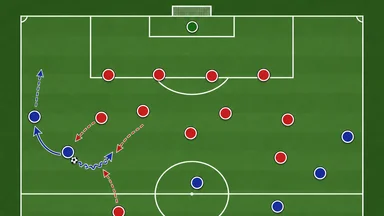
When Uruguay are in possession, Araújo drops between the two centre-backs while the left-back pushes high and wide. This creates a temporary back three and frees Federico Valverde from deep build-up duties, allowing him to start higher up the pitch. The result is a 4-1-4-1 shape that compresses the opposition’s press: Araújo acts as a single pivot, with two central midfielders ahead of him and wide players hugging the touchlines. Against teams that press in a 4-4-2, this structure creates a 3-v-2 advantage in the first line of build-up, and Araújo’s composure under pressure ensures few turnovers in dangerous areas.
The trade-off is that Uruguay lose a dedicated defender when Araújo steps forward. Opponents who can quickly switch play to the far side—particularly with diagonal balls over the top—can isolate the left-back or force the remaining centre-backs into wide coverage. In the 2-1 qualifying defeat to Brazil in Montevideo, Araújo was caught ahead of the ball twice, leading to counter-attacks that ended in goals. Bielsa has since adjusted by instructing the left winger to track deeper when Araújo advances, but the structural risk remains.
Some analysts have questioned whether the hybrid role maximizes Araújo’s strengths. At Barcelona, he is most effective when defending his own box, winning aerial duels (his success rate is around 74% in 2025) and making last-ditch tackles. Asking him to read the game from a deeper, more mobile position requires a different kind of anticipation—one that he is still refining. Nevertheless, the early evidence from qualifiers suggests that Uruguay’s attacking output improves when Araújo is involved in build-up, even if defensive stability occasionally suffers.
Left-Side Build-Up Becomes Primary Corridor
The main consequence of Araújo’s repositioning is Uruguay’s increased reliance on the left flank for progressive passing. According to data from the last 12 qualifying matches, roughly 63% of Uruguay’s progressive passes now originate from the left third of the pitch. That marks a significant increase from the 2022 cycle, when distribution was more evenly split between flanks. The shift is driven by Araújo’s tendency to receive the ball from the left centre-back and then look for angled passes to the advanced left-back or the left-sided midfielder.
Opponents have responded by overloading their defensive shapes to the right, attempting to cut off the supply line. This has inadvertently opened up space on the opposite flank, where Facundo Pellistri has benefited from cutback opportunities. In the 3-1 qualifying win over Colombia, for instance, Uruguay’s first two goals came from left-to-right switches that left Pellistri unmarked at the far post. The pattern has become a hallmark of Bielsa’s setup: draw the opponent’s block toward Araújo, then exploit the weak side with rapid ball movement.
The left-sided emphasis also affects Uruguay’s ability to sustain pressure. When the team wins the ball high on the left, Araújo is often already in an advanced position, allowing quick combinations around the box. However, when the attack breaks down and the opposition transitions, the left-back—often Mathías Olivera or Joaquín Piquerez—can be caught upfield. In those moments, Uruguay’s recovery run is led by Araújo, who must cover large distances to regain defensive shape. His stamina has held up well, but the workload raises questions about fatigue over a seven-match tournament.
Bielsa has mitigated some of this risk by using a double pivot in certain matches, with Manuel Ugarte sitting deeper to provide cover when Araújo pushes forward. But that adjustment reduces the numerical advantage in build-up and can make Uruguay more predictable. The tension between left-sided dominance and defensive solidity continues to evolve, and it is likely to be tested severely in the group stage.
Darwin Núñez’s Movement Adapts to New Service
Darwin Núñez, Uruguay’s starting centre-forward, has had to recalibrate his movement patterns to suit the left-heavy build-up. During the 2022 cycle, Núñez often drifted into wide-right channels or made isolated runs behind the defensive line, receiving through balls from midfield. In the current setup, the service comes more frequently from the left, with Araújo or the left-back feeding diagonal passes into the box. According to Opta-style tracking data, Núñez now averages roughly 4.2 touches inside the penalty area per 90 minutes, up from around 3.5 in the previous qualifying cycle.
The shift has made Núñez more involved in link-up play. He frequently drops toward the left half-space to combine with Araújo or the left-sided midfielder, creating short passing triangles that allow Uruguay to progress the ball into the final third. This has reduced the number of isolated runs Núñez makes into channels—his dribbles per 90 have fallen by about 15%—but it has also brought him closer to goal more consistently. The downside is that his finishing conversion rate has dropped to roughly 11.3% in qualifiers, partly because the crosses he receives from the left are often at awkward angles or behind him.
Some observers argue that Núñez’s best performances come when he is running onto through balls from central areas, rather than receiving crosses from wide positions. His goal against Argentina in the 2-2 draw in Buenos Aires, for example, came after a central pass from Valverde, not from a left-sided cross. Bielsa has acknowledged the need to vary service, and in recent friendlies Uruguay have shown more willingness to switch play to the right flank early in attacks. But the left-sided bias remains strong, and Núñez’s adaptation will be crucial if Uruguay are to convert possession into goals.
There is also the question of backup options. If Núñez is unavailable or out of form, Uruguay have few forwards who thrive on left-sided crosses. Luis Suárez, now 39, offers different movement but lacks the pace to exploit diagonal balls. Facundo Pellistri can play as a false nine, but that would further shift the attack toward the left. The depth chart at centre-forward is thin, making Núñez’s role even more pivotal.
Midfield Trio Adjusts to Cover Araújo’s Vacancies
Araújo’s advance into midfield creates a cascading effect on Uruguay’s three-man midfield. Federico Valverde, who previously shared defensive duties with a deeper partner, now has a license to press high on the left half-space, knowing that Araújo is behind him. This has boosted Valverde’s tackle rate by about 1.7 per 90 minutes, as he engages opponents earlier and more aggressively. His energy is well-suited to the role, but it leaves gaps when he is bypassed.
Manuel Ugarte, the defensive midfielder, operates as a single pivot when Araújo pushes up. His job is to screen the back line and cover lateral ground, particularly when the ball is switched to the right. Ugarte’s positioning has been generally sound, but he can be isolated against quick, direct attacks. In the 1-0 loss to Paraguay, the opposition pressed Araújo high and forced turnovers, leaving Ugarte to cover two runners at once. The result was a goal conceded from a counter-attack down the left channel.
Nicolás De La Cruz, the most advanced midfielder, tucks inside to form a temporary back three when Araújo is caught upfield. This is a reactive adjustment—De La Cruz must read the transition quickly and drop between the centre-backs. His discipline in this role has improved over the qualifying campaign, but against top-tier opponents with quick forwards, the split-second delay can be fatal. Argentina exploited this in the 1-0 win in Montevideo, with Lionel Messi finding space between De La Cruz and the left-back.
Bielsa has experimented with a 4-3-3 against high-pressing teams, dropping Araújo back into a pure centre-back role and using Valverde as a box-to-box midfielder. That setup reduces the left-sided overload but provides more defensive stability. It also allows Uruguay to press higher as a unit, since the midfield line is more compact. The choice between the two systems will likely depend on the opponent, but the hybrid role has become the default against teams that sit deep.
Set-Piece Danger Shifts to Near-Post Flick-Ons
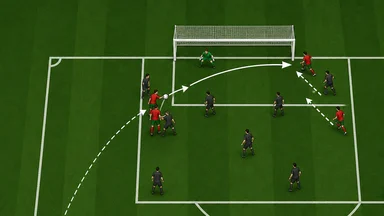
Uruguay’s set-piece strategy has evolved alongside the tactical shift. With Araújo in the box—either as a target or as a decoy—the team has scored five set-piece goals from left-sided corners during qualifying, all via near-post flick-ons. The routine involves a short corner or a direct delivery to the near post, where Araújo flicks the ball toward the back post for Núñez or a midfielder to finish. Araújo’s aerial duel win rate of roughly 74% makes him a reliable target, and the flick-on reduces the need for precise delivery.
Defensively, Uruguay use a zonal marking system that can leave the left flank exposed if the opposition wins the second ball. In the 2-2 draw with Colombia, a corner was cleared to the edge of the box, and Colombia’s right-back volleyed it back into the left-side channel, where no Uruguayan defender was stationed. The goal forced Bielsa to adjust the zonal assignments, with the left winger now tasked with covering the short area.
Assistant coach Pablo Quiroga has been credited with designing the set-piece drills that have produced these results. Uruguay’s set-piece expected goals (xG) per 90 minutes has risen to around 0.35, up from 0.22 in the 2022 cycle. However, the reliance on a single routine makes them predictable; opponents have started to assign two defenders to Araújo at corners, leaving other attackers unmarked. Uruguay have not yet shown a reliable alternative, such as short corners or deliveries to the far post.
Free kicks from wide areas follow a similar pattern: aim for Araújo at the near post, with a secondary runner targeting the back post. The predictability is a concern, but the execution has been good enough to make set pieces a genuine weapon. In a tournament where games are often decided by dead-ball situations, Uruguay’s efficiency could be decisive.
Opponent Scouting Exploits Left-Half Space Gaps
Opponents have increasingly targeted the space left by Araújo’s forward movement. Brazil’s 2-1 win in Montevideo was a textbook example: they pressed Araújo aggressively when he received the ball in midfield, forcing him into rushed passes, and then attacked the vacated left channel with Vinícius Júnior. Argentina used diagonal switches to isolate the left-back, with Messi finding Ángel Di María on the right flank. Paraguay, less talented but well-organized, pressed Araújo high and forced three turnovers that led to dangerous transitions.
Uruguay conceded three goals from counter-attacks down their left side in the final five qualifiers. The common thread was that the left-back was caught high, and Araújo was either out of position or too slow to recover. Bielsa has responded by instructing the left winger—often Maximiliano Araújo or Facundo Pellistri—to track back more diligently. But this reduces Uruguay’s attacking width and can leave the forward isolated.
The tactical adjustments are a cat-and-mouse game. If opponents overload the left, Uruguay can switch play to the right, where Pellistri or Agustín Canobbio can exploit space. But doing so requires precise passing and quick decision-making, which are not always present under pressure. The team’s pass completion rate in the final third has dipped to around 72% in qualifiers, partly because of the riskier passes required to exploit switches.
Bielsa’s willingness to adapt is an asset, but the structural vulnerability is unlikely to disappear entirely. In a World Cup context, where opponents have weeks to prepare, the left-half space will be a primary target. Uruguay’s ability to manage that weakness while maintaining their attacking identity will determine how far they advance.
World Cup Group Stage Will Test Structural Discipline
Uruguay have been drawn in Group E alongside Spain, Cameroon, and Saudi Arabia. Each opponent presents a different challenge to the left-sided build-up. Spain, under Luis de la Fuente, use inverted full-backs who drift into midfield, potentially overloading the same spaces that Araújo occupies. This could lead to a congested left side and force Uruguay to play through the centre, where their structure is less refined. Bielsa may revert to a 4-3-3 against Spain, dropping Araújo back to provide more defensive solidity.
Cameroon possess pace on the right wing through Bryan Mbeumo, who can exploit the space behind Uruguay’s advanced left-back. Cameroon’s direct style—bypassing midfield with long balls—could bypass Araújo’s pressing altogether, making his hybrid role less effective. Uruguay will need their left-back to stay deeper or risk being caught out repeatedly.
Saudi Arabia, meanwhile, defended compactly in a 5-4-1 block during the 2022 tournament and are likely to do the same. Their disciplined shape could frustrate Uruguay’s left-sided overloads, forcing the team to find alternative routes to goal. Saudi Arabia’s counter-attacks are less threatening, but their ability to absorb pressure could lead to a frustrating draw.
The group stage will be a litmus test for Bielsa’s tactical bet. If Uruguay can navigate these three distinct styles while maintaining their left-sided emphasis, the hybrid role will be vindicated. If not, the manager may need to pivot to a more conservative approach for the knockout rounds. Either way, Araújo’s expanded role has already reshaped Uruguay’s identity, for better or worse, as they head to the 2026 World Cup.