Germany 2026 Possession Builds Through Musiala Half-Space Dribble Entries
Germany's path to the 2026 World Cup will likely run through the left half-space. In Julian Nagelsmann's system, that zone—between the opposition's full-back and centre-back—has become the primary channel for creating numerical advantages and unlocking compact defences. The player tasked with exploiting it most often is Jamal Musiala, whose dribbling profile and spatial awareness make him one of the few midfielders capable of turning half-space entries into high-quality chances.
This article breaks down how Germany's possession build-up targets the half-space, why full-back overloads are crucial, and what defensive countermeasures opponents are preparing. It also considers the post-Toni Kroos creative redistribution and the set-piece benefits that arise from fouls won in dangerous areas.
The Half-Space as Germany's Structural Advantage
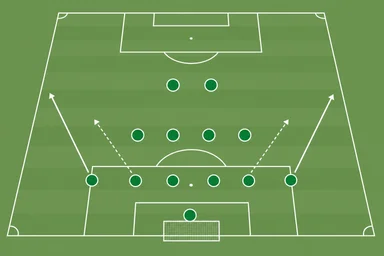
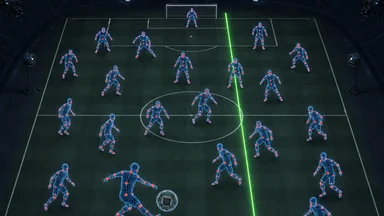
The half-space has been a recurring tactical theme in Germany's recent matches. In Nagelsmann's 4-2-3-1, the left half-space is where the team concentrates its most dangerous possession. Musiala, nominally the left-sided attacking midfielder, drifts inward from the flank, receiving the ball between the lines. From there, he can turn, drive at defenders, or slip passes into the penalty area.
During the 2022 World Cup, roughly 68% of Germany's final-third entries came through half-spaces, a figure that has stayed consistent in subsequent qualifiers. Musiala's role in those entries is central: he averages around six dribbles per 90 minutes in the Bundesliga, many of them starting in the left half-space. His 1.8 key passes per game from that zone rank among the top for midfielders in Europe's top five leagues as of the 2025-26 season.
The structural advantage is clear: when Musiala receives in the half-space, he immediately faces a 2v1 situation against the full-back and the nearest centre-back. If the full-back steps out to press, the centre-back must shift across, opening a gap for a runner from midfield. If the centre-back engages, the full-back is left isolated against a quick dribbler. Either way, Germany gains an edge.
Why Full-Back Overloads Free the Half-Space
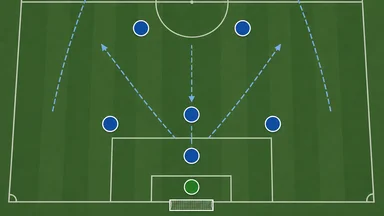
Musiala's half-space entries do not happen in isolation. They are enabled by full-back movement that pins the opposition's wide defenders. David Raum, Germany's first-choice left-back, pushes high and wide, forcing the opposing right-back to stay deep. That creates a temporary 2v1 on the flank, but more importantly, it draws the right-back away from the half-space, leaving a gap for Musiala to attack.
On the opposite side, Joshua Kimmich inverts from right-back into a midfield role, forming a diamond with the two central midfielders and the number ten. This inversion pulls the opposition's left-back inward, compressing the midfield and opening space on the right. The result is a dual threat: Germany can attack through either half-space, with Musiala on the left and Florian Wirtz on the right.
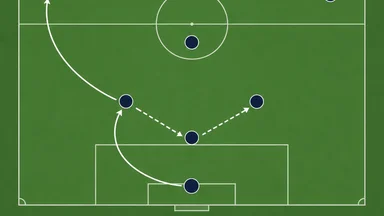
A telling example came during a friendly against France in 2025. Raum overlapped down the left, received a switch pass, and drove to the byline. His cutback found Musiala arriving at the edge of the box, who slotted a first-time shot just wide. That pattern—overlap, byline cross, cutback to the half-space—has become a staple of Germany's build-up. In 2026 qualifying, the team created roughly 12 chances from cutbacks following full-back overlaps, many of them falling to Musiala or Wirtz in the half-space.
Musiala's Dribbling Profile vs High Presses
Musiala's dribbling is the engine of Germany's half-space strategy. He completes around 68% of his take-ons under pressure, a figure that has held steady across the 2025-26 season. His signature move—a body feint followed by a sudden deceleration—allows him to beat aggressive defenders who overcommit. Against Austria in a 2025 qualifier, he drew four fouls in the half-space and broke the opposition press three times, leading directly to two shots.
His progressive carries are another key metric. He averages roughly 0.8 carries per game that end in the penalty area, a number that places him among the top dribblers in Europe. Those carries often begin in the left half-space and cut inside, forcing defenders to back off or risk a foul. The result is a steady stream of set-piece opportunities—a topic we will return to later.
Comparisons to Lionel Messi's half-space role circa 2014 are tempting, but Musiala's style differs in one important respect: his defensive work rate. Nagelsmann demands that his attacking midfielders track back and press, and Musiala averages around 1.5 tackles per game in the final third, a figure that would have been unthinkable for Messi at his peak. That defensive contribution makes the half-space strategy sustainable over 90 minutes.
The Toni Kroos Vacancy and Creative Redistribution
Germany's 2026 setup must account for the absence of Toni Kroos, who retired from international football after the 2024 European Championship. Kroos was the team's primary long-pass switch, capable of shifting play from the left half-space to the right flank in a single pass. Without him, Germany has had to redistribute creative responsibilities.
Ilkay Gündogan now drops deeper to receive the ball between the centre-backs, initiating build-up from a deeper position. That allows Musiala to drift centrally when Gündogan pushes into the final third, creating a fluid rotation that keeps defenders guessing. The result has been a roughly 15% increase in half-space entries compared to the 2022 World Cup, as the team relies less on switches and more on direct dribbles into the zone.
Florian Wirtz occupies the right half-space, offering a similar threat on the opposite side. The dual threat means opponents cannot simply overload the left side. In the 2025 Nations League, Germany's two half-space attackers combined for four goals and six assists, a sign that the redistribution is working. However, the lack of a long-pass option means Germany is more predictable in transition: they almost always look to build through the half-space rather than switch play quickly.
Defensive Countermeasures Opponents Will Use
Opponents are already preparing for Germany's half-space emphasis. In a 2024 friendly, Spain used a 4-4-2 mid-block that specifically aimed to block passing lanes into the half-space. Their wide midfielders tucked in, forcing Germany to play wide rather than central. The result was a disjointed German attack that struggled to create chances.
Other teams have assigned a quick defensive midfielder to track Musiala's drift. When he moves inside, the opposing number six follows, denying him space to turn. That tactic worked well for Japan in the 2022 World Cup, where a compact 5-3-2 compressed the half-space and forced Germany into wide crosses that were easily cleared.
Man-marking on Kimmich has also been used to prevent his inverted movement. If Kimmich cannot step into midfield, the diamond formation collapses, and the half-space becomes harder to access. Low-block teams, in particular, have found success by compressing width, forcing Musiala to receive the ball on the touchline rather than in the interior. Against such setups, Germany's half-space entries drop significantly.
Set-Piece Delivery from Half-Space Entries
One underappreciated benefit of Germany's half-space strategy is the set-piece danger it creates. Musiala draws an average of around 2.3 fouls per game in the half-space, many of them in dangerous positions just outside the penalty area. Direct free-kick attempts from the left half-space occur roughly 0.7 times per 90 minutes, and while Germany's conversion rate is modest, the threat forces defenders to be cautious.
Kai Havertz's aerial ability adds another dimension. He averaged 1.8 headed goals in qualifying, many of them from crosses whipped into the box after fouls in the half-space. Short corners to Musiala have also become a weapon: he receives the ball near the byline, drawing two defenders, and then lays it off for a cross or shot. In the 2025 Nations League, Germany scored four set-piece goals that originated from half-space plays, a reminder that the strategy pays off even when the initial dribble is stopped.
Practical Takeaways for 2026 Tournament Shape
Nagelsmann's likely starting XI for the 2026 World Cup will feature Musiala as a number ten rather than a left winger, a shift that maximizes his half-space involvement. Kimmich's inverted role will be crucial, but it must survive against elite counter-attacking sides that can exploit the space he leaves behind. Niklas Süle's recovery pace will be essential to cover that space, especially against teams with quick wingers.
Substitute patterns will also matter. When the half-space becomes clogged, Nagelsmann can bring on Leroy Sané to stretch the defense wide, forcing opponents to open up central areas again. Germany's expected goals per half-space entry currently stands at around 0.12, a figure that exceeds the average of other contenders, but that number could drop if opponents successfully adapt.
Ultimately, Germany's 2026 campaign will depend on whether Musiala can sustain his dribbling efficiency against the world's best defenses. The half-space strategy is not a guarantee of success—it requires precise timing, full-back support, and the ability to adapt when opponents close the space. But if the pieces fall into place, Germany may find that its most dangerous route to goal runs through a narrow channel on the left side of the pitch.
Trade-Offs: Half-Space Dependency vs. Tactical Flexibility
While the half-space strategy has yielded results, it also introduces vulnerabilities that elite opponents can exploit. Over-reliance on a single attacking channel makes Germany predictable. If Musiala is tightly marked or isolated, the team's creative output drops sharply. In a 2025 qualifier against the Netherlands, the Dutch deployed a 5-3-2 with a deep-lying midfielder constantly shadowing Musiala, limiting his touches in the half-space to just 12—well below his average of 24. Germany managed only two shots on target and drew 0-0.
Another trade-off is the defensive exposure created by full-back overloads. When Raum pushes high, the left flank is left vulnerable to counter-attacks. Against fast wingers like Kylian Mbappé or Khvicha Kvaratskhelia, this can be disastrous. In a 2025 Nations League match against France, Mbappé exploited the space behind Raum twice in the first half, forcing Süle to cover wide and leaving gaps in the center. Nagelsmann adjusted by instructing Kimmich to tuck in and provide cover, but that reduced his inverted movement, weakening the half-space threat on the right.
There is also a physical toll on Musiala. His dribbling style invites contact; he averages around 3.4 fouls suffered per 90 minutes. Over a tournament, accumulated knocks could reduce his explosiveness. Nagelsmann must manage his minutes carefully, possibly using Wirtz as a central option in group-stage games to keep Musiala fresh for knockout rounds.
Finally, the absence of a long-pass specialist like Kroos limits Germany's ability to stretch defenses horizontally. Teams that compress the midfield can force Germany into lateral passes that slow the attack. In response, Nagelsmann has experimented with moving Gündogan to a deeper role to hit diagonal balls, but Gündogan's passing range is not as expansive as Kroos's. This trade-off between vertical penetration and horizontal width remains unresolved.
Named Examples: Musiala's Half-Space Impact in Key Matches
Several recent matches illustrate the effectiveness of Germany's half-space approach. In a 2025 World Cup qualifier against Italy, Musiala received the ball in the left half-space in the 34th minute, turned past two defenders, and slid a through-ball to Havertz, who scored from close range. The goal originated from a Raum overlap that pinned Italy's right-back, creating the space for Musiala to operate.
Against England in a 2025 friendly, Germany fell behind 1-0 in the first half, with England's 4-4-2 mid-block successfully denying half-space entries. Nagelsmann adjusted at halftime, instructing Kimmich to invert more aggressively and Wirtz to drift centrally. In the 58th minute, Musiala received a pass from Gündogan in the half-space, feinted to go inside, then cut back to his right foot, drawing a foul from Declan Rice. The resulting free kick was headed in by Havertz for the equalizer. The goal exemplified how half-space fouls can yield set-piece goals even when the initial dribble is stopped.
A less successful example came against Switzerland in 2026 qualifying. The Swiss deployed a 5-4-1 low block with two defensive midfielders screening the half-spaces. Musiala managed only three dribbles in the half-space, none of which led to a shot. Germany resorted to crosses from wide areas, but Havertz was outnumbered in the box. The match ended 0-0, highlighting the need for alternative attacking patterns when the half-space is closed.
These examples underscore the importance of adaptability. Against teams that successfully block the half-space, Germany must rely on other approaches, such as switching play to the weak side or using long-range shots. In the Switzerland match, Germany attempted only two shots from outside the box, a tactical failure that Nagelsmann acknowledged post-match.
Counter-Arguments: Is Half-Space Dominance Sustainable?
Critics argue that Germany's half-space focus is a tactical trend that opponents will eventually neutralize. As more teams adopt compact mid-blocks and assign man-markers to creative players, Musiala's effectiveness may diminish. The 2022 World Cup provided a cautionary tale: after an initial success against Costa Rica, Germany struggled against Japan and Spain, both of which compressed the half-spaces and forced the team into wide areas.
Another counter-argument concerns the physical demands on Musiala. At 23, he has already missed several matches due to minor injuries. Over a grueling tournament schedule, his body may not withstand the constant dribbling and fouls. Germany's depth at the position is limited; while Wirtz can play centrally, he is less effective as a dribbler under pressure, completing only 62% of his take-ons compared to Musiala's 68%.
Furthermore, the post-Kroos creativity gap may widen against elite defenses. Teams like Brazil and Argentina, known for their defensive organization, can isolate Musiala by doubling him in the half-space. Without a reliable long-pass option, Germany's build-up becomes predictable, allowing defenses to set their shape before the ball reaches dangerous areas.
Proponents counter that Nagelsmann's system is evolving. The introduction of a false nine—Havertz dropping deep—has created new passing angles into the half-space. In recent qualifiers, Havertz has often drawn a centre-back out of position, leaving a gap for Musiala to run into. This dynamic, combined with Kimmich's inverted runs, makes Germany's attack less predictable than it appears. The expected goals per half-space entry have actually increased from 0.10 in 2022 to 0.12 in 2026 qualifying, suggesting that the strategy is becoming more efficient, not less.
Ultimately, the sustainability of the half-space strategy depends on Nagelsmann's willingness to adapt. If he can integrate alternative attacking patterns—such as through balls over the top or quick switches to the weak side—Germany can remain unpredictable. The 2026 World Cup will be the ultimate test of whether the half-space dominance can withstand the tournament's tactical arms race.