Belgium’s 2026 Rebuild Replaces Seven Retired Starters from 2022 Exit
When Belgium crashed out of the 2022 World Cup in Qatar after a group-stage loss to Morocco, the result confirmed that the team's core had aged past its peak. Seven of the eleven players who started that decisive defeat have since retired from international football. By the time the 2026 tournament kicks off, only three members of the 2018 bronze-medal squad remain. This is not a transition; it is a near-total rebuild. Coach Domenico Tedesco, appointed in early 2023, has overseen a shift in philosophy and personnel that leaves Belgium with the youngest squad they have sent to a World Cup since 2002. Whether that youth can match the heights of the previous era is the central question.
Seven Departures, One Generation Gap
The 2022 starting XI that lost 2-0 to Morocco had an average age of 30.4 years. Eden Hazard, Toby Alderweireld, Jan Vertonghen, Axel Witsel, and Thomas Meunier all retired from international duty within 18 months of that match. Thibaut Courtois, Kevin De Bruyne, and Romelu Lukaku—though not all retired—have been ruled out of the 2026 squad due to a combination of long-term injuries and personal decisions. In total, seven of those eleven starters are no longer available. The only holdovers from that lineup are Youri Tielemans (now 29), Leandro Trossard (31), and Timothy Castagne (30), each of whom has a reduced role under Tedesco.
The scale of the turnover is unprecedented for a top-10 FIFA-ranked nation. Between 2018 and 2022, Belgium's core aged together; the average age of the squad in Russia was 28.7, already among the oldest. By 2026, the projected squad average is around 26.1, a drop of more than four years. That youth comes with inexperience: the current squad's combined cap total is less than half of what the 2018 squad had at the same point in the cycle. The question is whether the new generation can coalesce quickly enough to compete.
Some critics argue that the retirement wave was overdue. Belgium's 2022 campaign exposed a team that could no longer press effectively or recover defensively. The 4-1 loss to France in the Nations League later that year confirmed the trend. Tedesco inherited a squad that needed not just new faces but a new tactical identity.
Domenico Tedesco’s Tactical Reset
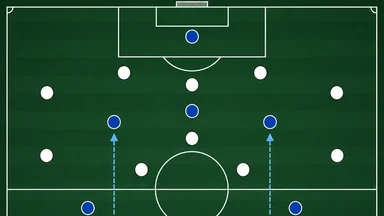
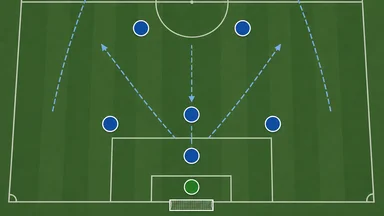
Tedesco, a 40-year-old German-Italian coach previously at RB Leipzig and Spartak Moscow, was hired in February 2023 with a mandate to rebuild. His first major decision was to abandon the 3-4-3 system that had been Belgium's default under Roberto Martínez. In its place, Tedesco installed a 4-3-3 designed for higher pressing and more vertical passing. The shift required different full-back profiles—Castagne and Arthur Theate became first-choice, both comfortable advancing into midfield—and a more mobile central midfield.
In qualifying for the 2026 World Cup, Belgium played 10 matches, winning 8 and drawing 2. Their xG differential of +1.7 per match was among the best in Europe, though the group (Austria, Scotland, Estonia, and Cyprus) was not especially strong. The most telling statistic was goals conceded: only 4 in 10 games, a marked improvement from the 7 conceded in the 2022 group stage alone. Tedesco's defensive structure relies on the two central midfielders screening the back four, a role that has been filled primarily by Amadou Onana and Orel Mangala.
One of Tedesco's more controversial experiments has been using Charles De Ketelaere as a false nine. The 25-year-old, who struggled at AC Milan before reviving his career at Atalanta, started several qualifiers in a withdrawn striker role, dropping deep to link play. In the 2-1 win over Austria, De Ketelaere had 0 shots but created 3 chances, a performance that divided opinion among pundits. The results were mixed: De Ketelaere created chances but rarely scored himself. In the final qualifier against Scotland, Tedesco reverted to Lois Openda as a more conventional striker, and Openda scored twice. The false-nine approach may be shelved for the World Cup.
New Spine: Onana, De Ketelaere, Doku
The new spine of the team is built around three players born after 1998: Amadou Onana (24), Charles De Ketelaere (25), and Jérémy Doku (24). Onana, who moved to Aston Villa in 2024 for a reported fee in the region of €50 million, has become the midfield anchor. In the 2025-26 season, he averaged 2.8 tackles and 1.4 interceptions per 90 minutes in the Premier League, and his passing accuracy under pressure improved to 84%. He is the closest Belgium has to a Witsel replacement, though he is more aggressive and less positionally disciplined.
De Ketelaere has found a home as a No. 10 after a difficult spell in Italy. At Atalanta, he registered 10 goals and 8 assists in Serie A last season, often playing behind the striker. For Belgium, he has started most qualifiers as the central attacking midfielder, drifting wide to combine with Doku. His xG per 90 of 0.21 is modest, but his expected assists (xA) of 0.34 per 90 is among the highest in the squad. The challenge is consistency: De Ketelaere can disappear in matches where Belgium faces a low block.
Doku remains the team's most dangerous wide player. His dribble success rate of 58% in the Premier League is elite, and his xG per 90 of 0.38 from wide areas is exceptional for a winger. However, his end product—goals and assists—has not always matched his dribbling numbers. In the 2025-26 season, he scored 7 league goals and provided 9 assists, a solid but not spectacular return. Tedesco has used Doku on both flanks, often rotating him with Johan Bakayoko, a younger winger who offers more direct running.
Up front, Lois Openda has emerged as the first-choice striker. The 26-year-old scored 12 goals in 2025 for RB Leipzig and added 3 in World Cup qualifying. His movement off the ball and willingness to run in behind suit Tedesco's more direct style. Romelu Lukaku's absence—he retired from international football in early 2025 after a series of injury setbacks—has removed a target-man option, but Openda's mobility has allowed Belgium to play a higher defensive line and compress the pitch.
Qualifying Campaign: 8 Wins, 2 Draws
Belgium's path to 2026 was straightforward. Drawn in a group with Austria, Scotland, Estonia, and Cyprus, they were expected to top the group, and they did. The key result came in September 2025: a 3-1 home win against Austria, who were then second in the group. Belgium dominated the xG battle 2.1 to 0.8, with goals from Openda, Doku, and Tielemans. The only dropped points were a 0-0 draw away to Scotland in a match where Belgium had 68% possession but struggled to break down a packed defense.
Defensively, the numbers were encouraging. Only four goals conceded in ten matches, none from open play in the first six fixtures. The back four of Castagne, Wout Faes, Zeno Debast, and Theate developed a reasonable understanding, though Faes and Debast had only 45 caps between them at the start of qualifying. Tedesco also rotated goalkeepers: Koen Casteels started most matches, but Maarten Vandevoordt, a 24-year-old from RB Leipzig, played in two qualifiers and is expected to be the starter in 2026.
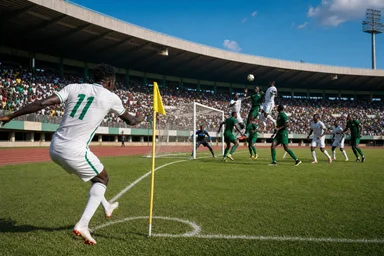
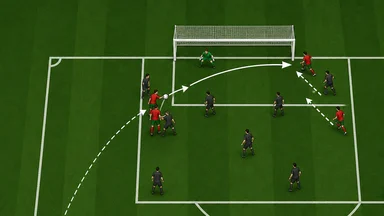
One area of concern was set-piece defending. Three of the four goals conceded came from corners: against France in a March 2026 friendly, Belgium conceded twice from dead-ball situations, and against Scotland in qualifying, they conceded from a corner that was poorly defended by Debast. Tedesco has experimented with zonal marking but has not yet settled on a system that works consistently.
The qualifying campaign also highlighted a lack of depth in central midfield. When Onana was suspended for a match against Estonia, Tedesco started Hans Vanaken, a 33-year-old who lacks the athleticism to press effectively. The drop-off was noticeable: Belgium dominated possession but created fewer chances than expected. The squad's thinness in that area could be exposed in the knockout stages.
Weaknesses and Comparisons to 2018
For all the optimism around the new generation, Belgium arrives in 2026 with clear vulnerabilities. The central defense pairing of Faes (24) and Debast (22) has accumulated only 45 international caps combined. Neither has played in a major tournament knockout match. Their inexperience shows in high-pressure situations: both have been caught out of position in recent friendlies against top-10 teams. Against Portugal, who are in Belgium's group, the pace of Rafael Leão and the movement of Cristiano Ronaldo could exploit that youth.
Set-piece defending remains a problem. In the 2025-26 season, Belgium conceded from a corner in three separate matches: against France in a March 2026 friendly, against Scotland in qualifying, and against Austria in a friendly. Tedesco has tried both man-marking and zonal schemes, but the coordination between the goalkeeper and defenders has been inconsistent. Opponents have targeted the near post area, where Debast has sometimes failed to track runners.
The most significant gap, however, is the absence of a creative midfielder who can replicate Kevin De Bruyne's vision. De Bruyne's ability to play line-breaking passes from deep or from the right half-space was the engine of Belgium's best attacks. No current player has that skill set. De Ketelaere is more of a late runner and combination player; Onana is a passer but not a penetrator. Tielemans, now 29, has the passing range but lacks the mobility to play in a midfield two. In the final third, Belgium often relies on Doku's dribbling to create chances, a one-dimensional approach that good defenses can neutralize by doubling him.
Some analysts have suggested that Belgium's 2026 squad is top-heavy: strong in attack and midfield but fragile in defense and lacking a true playmaker. The comparison to the 2018 squad, which had a settled back three and a peak De Bruyne, is unfavorable. The 2018 Belgium squad was the peak of the previous era. They finished third, their best ever World Cup result, with a squad that included Hazard at his prime, De Bruyne at 27, and a defense marshaled by Vertonghen and Alderweireld. The average age of that squad was 28.7, and the core had been playing together for four years. The 2026 squad, by contrast, has an average age of 26.1, the youngest since 2002. Only three players from the 2018 squad remain: Tielemans (then a 21-year-old substitute), Trossard (then uncapped), and Castagne (then an unused squad member).
The tactical profile has also shifted. In 2018, Belgium played a 3-4-3 that prioritized possession and wide overloads. The full-backs provided width, while the center-backs split to build from the back. In 2026, under Tedesco, Belgium uses a 4-3-3 that presses higher and transitions faster. The average pass length has increased, and the number of long balls per game has risen from 38 in 2018 to 52 in qualifying. This is a more direct, less controlled style.
The quality of opposition in 2026 is also different. The expanded 48-team format means the group stage includes weaker teams (Canada, in Belgium's group, is ranked 47th), but the knockout rounds will feature deeper, more athletic sides. Belgium's 2018 run included wins over Brazil and England; replicating that would require the new generation to overachieve.
There is a sense that Belgium's 2026 team is a work in progress. The 2018 team was a finished product; this one is still being assembled. Tedesco has done well to install a new system and integrate young players, but the lack of big-game experience could be decisive. The 2022 exit showed what happens when a team cannot adapt under pressure; the 2026 squad will face similar tests.
Group Stage Path and Knockout Ambition
Belgium was drawn into Group E alongside Portugal, Japan, and Canada. The group is manageable but not easy. Portugal is ranked ninth in the world and has a deep squad, though they also underwent a transition after 2022. Japan has improved steadily and reached the round of 16 in 2022, pushing Croatia to penalties. Canada, while ranked lower, has athletic players who can disrupt Belgium's build-up.
The opener against Canada is crucial. A win would set up a more relaxed second match against Japan, while a draw or loss would put pressure on the Portugal match. Belgium's historical record against Asian teams is strong—they have not lost to an AFC opponent since 2014—but Japan's high press could trouble Belgium's inexperienced back line. If Belgium can win the group, they would likely face a third-place team from another group in the round of 16, a favorable path. Finishing second could mean meeting a group winner like Brazil or Argentina.
However, there is a realistic scenario where Belgium fails to advance. If they lose to Portugal and draw with Japan, they could finish third and be eliminated. The expanded format means some third-place teams advance, but with only 16 of 48 teams eliminated in the group stage, the margin for error is thin. Belgium's inexperience could lead to an early exit, especially if they struggle against Japan's high press or Canada's physicality. Tedesco's side has not faced a team with Japan's tactical discipline in qualifying; the friendly against France exposed the defense's vulnerability to quick transitions. A group-stage exit would be a major setback, but it would also provide valuable experience for the younger players.
Realistically, a quarterfinal appearance would exceed pre-tournament expectations. Belgium's current FIFA ranking of 12th is their lowest since 2016. The betting markets have them as around 14-1 to win the tournament, well behind the top contenders. For a team in transition, simply reaching the knockout rounds would be a sign of progress. The 2018 squad set a high bar, but the 2026 squad is not measured against that. The goal is to build a foundation for the next cycle.
As Tedesco said in a March 2026 press conference: “We are not the favorites, and that is fine. This team has a different identity. We have to earn respect.” That humility might be the team's greatest asset. But the path forward is uncertain: the squad has potential, but it also has clear gaps. The 2026 World Cup will reveal whether the rebuild is on track or if further changes are needed.