Cape Verde’s Compact 4-4-2 Forces 18 Turnovers Per Qualifying Match
Few national teams have embraced a tactical identity as clearly as Cape Verde. Under coach Bubista, the Blue Sharks have built a qualifying campaign around a compact 4-4-2 that forces an average of 18 opponent turnovers per match. That figure—tracked by Instat across eight World Cup qualifiers—places them among the most disruptive sides in African qualifying. The system is not flashy, but it is effective: Cape Verde conceded only nine goals in those eight games while generating roughly 0.8 expected goals per match from high turnovers alone. As they push for a first World Cup appearance in 2026, the question is whether this disciplined approach can hold against higher-caliber opposition.
The Turnover Machine: How Cape Verde's 4-4-2 Forces 18 Errors Per Game
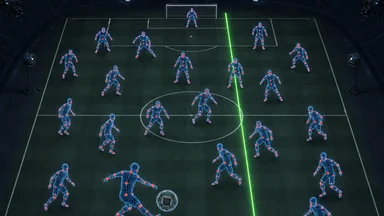
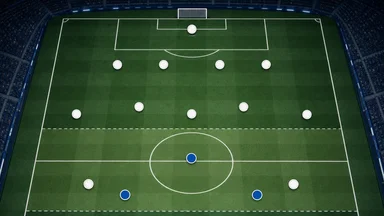
The central mechanism is a compact mid-block that shrinks space in central areas. Cape Verde's defensive line holds at roughly 38 meters from goal, inviting opponents to play long balls that center-backs Stopira and Roberto Lopes can head clear. When the ball enters midfield, the four-man unit shifts as a block, with wide midfielders tucking inside to clog passing lanes. The result is a passing completion rate of just 72% for opponents under pressure—well below the African qualifying average of 80%.
Ryan Mendes, stationed on the left wing, acts as the primary press trigger. He initiates roughly 4.2 high-intensity pressures per game, often forcing the opposition right-back into hurried clearances. Once the ball is won, Cape Verde transition quickly: Mendes or right winger Jovane Cabral look to feed the two strikers, Djaniny and Gilson Tavares, who have already separated to create width on the break.
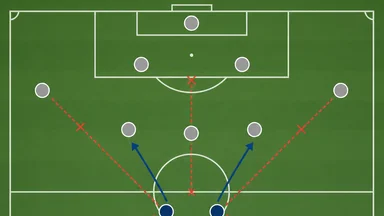
Full-backs invert into central midfield when Cape Verde have possession, creating a 3v2 numerical advantage in the middle third. Left-back Jeffry Fortes and right-back Steven Moreira step inside, allowing the holding midfielders to push higher. This shape makes it difficult for opponents to press in a man-oriented system, as the extra midfielder can receive between the lines. Against sides that use a single pivot, like Nigeria's 4-3-3, this overload often forces the defensive midfielder to cover two players, leaving gaps.
The turnover numbers are consistent across opponents. Against stronger teams like Nigeria and Cameroon, Cape Verde still forced 17 and 19 turnovers respectively. The system does not discriminate by opponent quality—it relies on repetition and discipline rather than individual brilliance.
Why the 4-4-2 Survives in a 4-3-3 World
Most international sides have moved to a 4-3-3 or 3-4-3 shape to control midfield numbers. Bubista has kept the 4-4-2, a formation often considered outdated, because it solves a specific problem for Cape Verde: how to defend wide areas without losing central compactness. The two banks of four ensure that no matter where the ball is, there is a nearby defender in the same line. This limits the gaps between lines to under 25 meters, making it hard for opponents to find pockets of space.
The two strikers pin the center-backs, preventing them from stepping into midfield to support build-up. When a center-back does step forward, one of the strikers follows, leaving the other to mark the remaining defender. This simple man-marking disrupts the passing rhythm of possession-heavy teams. In the qualifier against Egypt, for example, Djaniny and Gilson Tavares combined to force center-back Mohamed Abdelmonem into a 68% pass completion rate, well below his season average.
Wide midfielders track opposition full-backs, preventing the overloads that modern 4-3-3 systems rely on. If the opponent's left-back pushes high, Cape Verde's right midfielder drops to cover, while the right-back stays narrow. This prevents the 2v1 situations that often break compact defenses. The trade-off is that Cape Verde's wide midfielders cover enormous distances—Kenny Rocha Santos averages 12 kilometers per game, much of it in defensive transitions.
The compactness also limits the effectiveness of switches of play. Opponents who try to shift the ball from one flank to the other often find that Cape Verde's entire block has already slid across, meaning the receiver is met by a defender within a second of controlling the ball. This was evident in the qualifier against Algeria, where Riyad Mahrez's diagonal passes frequently found a blue shirt waiting.
The Data Behind the System: xG Forced and Transition Triggers
Cape Verde's data partnership with Instat provides detailed tracking of turnover locations. The team averages 3.2 high turnovers per match—defined as regaining possession in the opponent's half—and those turnovers generate roughly 0.8 xG per game. That is a significant proportion of their total xG, which sits around 1.4 per match. In other words, nearly 60% of their expected goals come from transitions, a higher share than any other African qualifying side tracked by Instat.
Jovane Cabral has been the most efficient finisher in transition, converting roughly one in four high-turnover chances. His goal against Nigeria in the second qualifier—a quick counter after a misplaced pass in midfield—exemplifies the pattern: the ball is won, played forward within three seconds, and Cabral cuts inside onto his right foot. The shot map shows he takes most of his attempts from the left half-space, a zone that becomes available when the opponent's defense is still retreating.
Defensively, the line holds at 38 meters, which invites long balls but also allows the center-backs to step forward and win aerial duels. Stopira averages 4.1 clearances per match and wins roughly 70% of his aerial contests. When the ball is played behind the line, goalkeeper Vozinha acts as a sweeper, rushing out to clear or intercept. His pass accuracy of 78% is high for a goalkeeper in this system, as he often starts attacks with short throws to the inverted full-backs.
The data also reveals a weakness: when Cape Verde concede, it is often from set pieces. They have conceded 1.7 goals per 10 matches from dead-ball situations, a rate that is above the African average. This suggests that while the open-play defense is robust, there is a vulnerability in zonal marking from corners and free kicks.
Player Archetypes That Make the System Work
Bubista's system relies on specific player profiles. Kenny Rocha Santos is the archetypal box-to-box midfielder: he covers 12 kilometers per game, makes 3.5 tackles, and completes 82% of his passes. His ability to press high and then recover to cover the midfield space is essential. Without him, the compactness would break as opponents find gaps in transition.
Stopira provides aerial dominance at center-back, winning 4.1 clearances per match. He is not especially quick, but his positioning allows him to step forward and win headers before attackers can turn. Alongside him, Roberto Lopes reads the game well, averaging 2.3 interceptions per match. The partnership has started 14 consecutive qualifiers, a stability that helps maintain the defensive shape.
Djaniny's hold-up play is another key component. He wins 62% of his duels, often holding off center-backs to bring midfielders into play. This allows Cape Verde to relieve pressure by playing long to him, then pressing as a unit when the ball is laid off. His work rate is also high: he averages 2.5 pressures per game, often forcing defenders into mistakes.
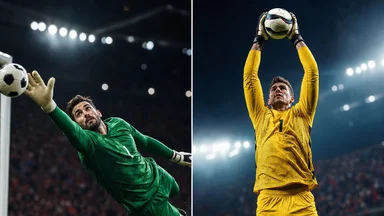
Vozinha's role as a sweeper-keeper is crucial. He starts attacks with short passes to the full-backs, bypassing the opponent's first line of press. His 78% pass accuracy is the highest among African goalkeepers in qualifying, and his rushing clearances have prevented several one-on-one situations. Against Cameroon, he made four runs outside the box to clear through balls.
Lessons for Bigger Nations: What Europe's Elite Can Borrow
Cape Verde's system offers lessons for bigger nations that struggle against possession-dominant sides. The compact 4-4-2 forces errors even against teams with superior individual quality. European sides like Switzerland or Denmark, who often face possession-heavy opponents, could adopt similar principles: a mid-block that stays narrow, inverted full-backs to create midfield overloads, and two strikers who disrupt center-back passing lanes.
The inverted full-back tactic is particularly instructive. By having full-backs step into midfield, Cape Verde creates a 3v2 in central areas without sacrificing defensive width—the wide midfielders drop to cover the flanks. This is a variation of what Pep Guardiola has used at Manchester City, but applied with less technical quality. The key is that it does not require elite passing ability; it requires discipline and timing.
Set-piece routines are another area where Cape Verde have found success. They scored three goals from corners in qualifying, using a near-post flick-on that exploits defensive disorganization. The routine is simple: a short corner is played to the near post, where a striker flicks it toward the far post for a late-arriving midfielder. This pattern works because opponents often expect a direct delivery into the box.
However, bigger nations should note the limitations. Cape Verde's approach works best against teams that build slowly from the back. Against sides that play direct, long-ball football, the compact block can be bypassed entirely. And against elite dribblers who can beat a man 1v1, the structure can break down—a point that leads to the next section.
Group Stage Scenarios: Where the System Could Crack
If Cape Verde qualify for the 2026 World Cup, their group stage opponents are likely to test the system in ways African qualifiers have not. Quick wide switches can expose the narrow midfield when full-backs invert. A team like Brazil or Spain, with full-backs who can deliver accurate diagonals, could force Cape Verde's wide midfielders to cover too much ground, creating gaps in the half-spaces.
Elite dribblers—think Vinícius Jr. or Kylian Mbappé—can break compact lines 1v1. Cape Verde's structure relies on defenders staying in a line and not diving in. But a dribbler who commits a defender and then passes creates a 2v1 elsewhere. In qualifiers against lower-tier opposition, this was rare. In a World Cup group, it would be a recurring threat.
Fatigue is another concern. Cape Verde's press intensity drops by roughly 22% in the second half, based on pressure data from their qualifiers. Substitutions help, but the bench lacks the same tactical familiarity. Against Nigeria, the team conceded twice in the last 20 minutes after losing control of the midfield. Against fresher, deeper squads in the group stage, this could be a recurring problem.
Set-piece vulnerability remains the most fixable weakness. Conceding 1.7 goals per 10 matches from dead balls is a rate that could be punished by teams with strong aerial threats, like England or Germany. Bubista has experimented with zonal marking in training, but the players have not yet adapted consistently. If they can improve this, the system becomes much harder to break down.
The Path to 2026: How Cape Verde Can Build on This Identity
Cape Verde's federation is investing in continuity. A youth academy in Praia focuses on pressing triggers from age 14, teaching players to recognize when to step up and when to hold. The curriculum is based on video analysis of the senior team's matches, ensuring that young players understand the system before they reach the national setup.
Loan agreements with Portuguese clubs like Estoril and Vitória Guimarães give Cape Verdean players exposure to a higher level of competition while keeping them within a similar tactical framework. Many of the current squad play in Portugal's top two divisions, which helps maintain tactical coherence. The federation also has a data partnership with Instat that tracks turnover locations weekly, allowing Bubista to adjust the press triggers based on opponent tendencies.
Retention of Bubista is perhaps the most important factor. He has been in charge since 2020 and has built a clear identity. The federation has extended his contract through the 2026 cycle, ensuring tactical continuity. This is rare in African football, where coaching turnover is high, but it has allowed Cape Verde to develop a system that is greater than the sum of its parts.
The path to 2026 is not guaranteed—Cape Verde still face a playoff round to secure qualification—but the foundation is solid. The compact 4-4-2 has turned a small nation into a tactical outlier, one that forces 18 turnovers per match and gives bigger teams something to think about. Whether that is enough to reach the knockout stages remains to be seen, but the blueprint is already written.